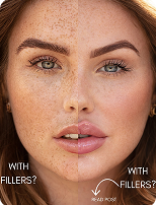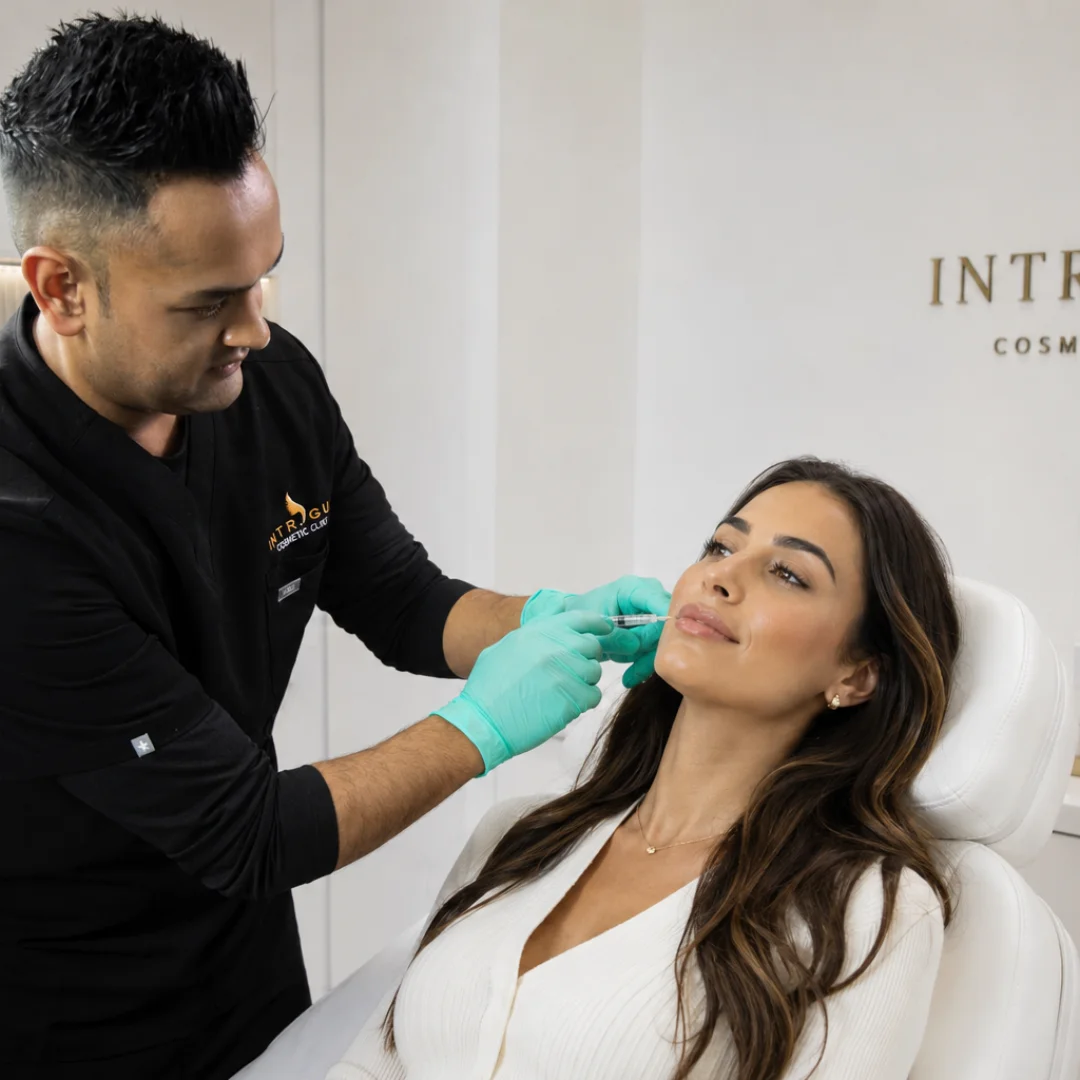
Natural-looking dermal fillers are one of the most popular non-surgical cosmetic treatments worldwide. Dermal fillers can help restore lost volume, soften lines, enhance facial contours, and achieve a fresher appearance without the risks associated with surgery.
But one question continues to dominate Google searches and AI-generated health queries:
The short answer is yes, when administered by a qualified, medically trained practitioner using approved products and appropriate techniques, dermal fillers have an excellent safety profile.
However, like any medical procedure, fillers carry risks. Understanding those risks, how to minimise them, and who should perform your treatment is essential before making a decision.
This guide explains everything you need to know about filler safety, including expert insights from award-winning aesthetics practitioner Amish Patel, BEM, founder of Intrigue Cosmetic Clinic.

Dermal fillers are injectable gels used to help restore lost volume, improve facial contouring, and reduce the visible appearance of fine lines, wrinkles and folds.
Today, there are two main types of fillers commonly used by aesthetic practitioners;
Hyaluronic acid (HA) is a naturally occurring substance found in the skin that helps maintain plumpness, hydration, and elasticity.
Poly-L-lactic Acid (PLLA) Fillers are biocompatible, synthetic substances that act as collagen stimulators, rather than immediate plumpers.
Common treatment areas include:
At Intrigue Cosmetic Clinic, we only use Hyaluronic acid fillers because they have a long-standing safety record. Hyaluronic acid is a sugar molecule which occurs naturally in the human body, and therefore, the body is generally more accepting of it. They are temporary and can be dissolved if necessary.

When performed correctly, dermal fillers are considered safe and effective.
However, the safety of filler treatments depends on several factors:
Many complications reported in the media are linked to treatments carried out by underqualified practitioners or the use of unregulated products.
According to leading aesthetic experts, the procedure itself is not inherently unsafe, but poor practices and inexperienced injectors often lead to a greater risk.
Amish Patel, BEM, award-winning aesthetics practitioner and founder of Intrigue Cosmetic Clinic, explains:
“Dermal fillers are extremely safe when administered by a qualified medical professional. Choose someone who has the correct training and experience because understanding facial anatomy and patient suitability is paramount. The most important decision a patient makes is not the actual treatment itself, but in choosing the right practitioner.”
Amish adds:
“Natural-looking filler results and patient safety should always take priority over trends, excessive volume, or quick fixes. An in-depth consultation should always precede treatment.”
Although complications are uncommon when dermal filler treatments are performed correctly, patients should understand potential risks.
Temporary side effects may include:
These effects usually resolve within a few days.
More serious complications can include:
One of the most significant risks is vascular occlusion, where filler accidentally enters or compresses a blood vessel.
If vascular occlusion is not recognised and treated promptly by your practitioner, it can lead to tissue damage and, in extremely rare cases, vision complications.
This reason is why dermal filler treatments should ONLY be carried out by medical health practitioners who are trained in complication management and emergency protocols and have access to the necessary drugs required in an emergency.

Dermal fillers are amongst the top five non-surgical anti-ageing treatments that actually work, but patients can significantly reduce risk by following a few important guidelines.
If you decide to go ahead with dermal fillers, make sure you choose a qualified medical healthcare professional. Look for the following:
Avoid selecting a provider based solely on price. Don’t be afraid to ask to see their qualifications, insurance, and examples of their dermal filler before-and-after results.
Amish’s Top Tip: Ensure Approved Products Are Used
Reputable clinics use established filler brands with strong safety data and regulatory approval. At Intrigue Cosmetic Clinic, we only use the best-quality filler for patient safety.
Always ask which product your practitioner plans to use and why it has been recommended for your treatment. This is particularly important, should you decide to have filler again in the same area or wish to dissolve it in the future.
Start with a face-to-face consultation.
A pre-treatment consultation should include:
Patients should never feel pressured into treatment.
Good aftercare can help minimise swelling, bruising, and unnecessary complications.
Lip fillers are among the most requested aesthetic treatments.
When performed conservatively and appropriately, lip fillers are generally very safe.
Issues often seen with lip fillers tend to arise in the following circumstances:
Beauty trends and lip enhancement focus on facial harmony, balance and natural movement rather than exaggerated volume. Choosing the best aesthetic clinic in Gravesend for lip fillers is easy if you follow these guidelines.
Cheek fillers have a strong safety profile when delivered by experienced practitioners.
Cheek fillers can:
Because the mid-face contains important blood vessels, advanced anatomical knowledge is particularly important in this area.
Dermal fillers and cosmetic surgery are entirely different procedures.
Compared with the risks of surgery, dermal fillers generally offer:
However, fillers cannot replicate every surgical outcome and so may not be suitable for every individual.
A professional consultation can determine the most appropriate treatment approach.
Although popular, dermal fillers may not be suitable for some individuals, including:
A detailed medical assessment is essential before any aesthetic treatment.
One of the biggest misconceptions surrounding fillers is that they always create an artificial appearance.
In reality, expertly performed filler treatments by aesthetic practitioners who specialise in natural-looking results should enhance existing features, rather than dramatically alter them.
Amish Patel, BEM, explains:
“The best aesthetic treatments are the ones that nobody notices specifically. Patients should still look like themselves, just more refreshed, confident and not obviously treated. Friends and family think you look great, but can’t quite put their finger on what or how.”
This philosophy reflects a growing trend towards more subtle, personalised aesthetic treatments that prioritise facial harmony and long-term outcomes, something Intrigue Cosmetic Clinic has offered since its foundation back in 2016.
Amish Patel, BEM, Award-Winning Aesthetics Practitioner, answers your FAQ.
” Current evidence on approved hyaluronic acid fillers indicates that they are safe for long-term use when administered appropriately. Regular reviews and treatment planning are recommended.”
“Yes. Most hyaluronic acid fillers can be dissolved without issue using an enzyme called hyaluronidase if required. However, you should always check with your practitioner before your treatment.”
“In my opinion, hyaluronic acid fillers. These are widely regarded as among the safest options because they are temporary, reversible, and supported by extensive clinical research.”
“Serious complications are rare, particularly when treatment is performed by experienced medical professionals using approved products.”
“Most patients will report feeling only mild discomfort, but it depends on the individual and the area being treated. Lips, for example, are more sensitive than cheeks. Most modern fillers contain lidocaine, a local anaesthetic that improves comfort during treatment.”
“Depending on the patient’s age and lifestyle, the area treated and product used, results can typically last anywhere between 3 and 18 months.”
“This is one of the most important questions to ask before sitting in the treatment chair. Don’t feel embarrassed to ask for the following:
The evidence is clear: dermal fillers are a safe and effective treatment IF they are performed by a qualified and experienced practitioner using approved products and evidence-based techniques.
Rather than asking whether fillers themselves are safe, patients should ask the following question:
“Is the practitioner performing my treatment qualified, experienced, and focused on patient safety?”
You considerably reduce your risk by choosing an experienced injector, attending a pre-treatment consultation, and maintaining realistic expectations, which makes it possible to enjoy natural-looking dermal filler results with a high level of safety and satisfaction.
For anybody considering dermal fillers either now or in the future, expert assessment and personalised treatment planning remain the most important factors in achieving both excellent results and peace of mind.

 Back to Blog



Choose how you’d like to connect with us. Our team is here to guide you every step of the way.


Schedule your personalised aesthetic consultation with our team.


Message us directly with any questions about treatments or availability.


Choose a convenient time for your online consultation.


Speak with our team today to book your appointment.
Schedule your personalised aesthetic consultation with our team.
Message us directly with any questions about treatments or availability.
Choose a convenient time for your online consultation.
Speak with our team today to book your appointment.